
Electrical Systems That Support Daily Demand
Panel & Service Upgrades in Camden for homes with frequent breaker trips or outdated fuse boxes
An electrical panel that trips breakers multiple times per month signals capacity problems that affect how appliances and systems function throughout your home. Towles Electric, Inc handles panel and service upgrades in Central Delaware and the Delmarva Peninsula for properties where existing infrastructure no longer matches electrical demand. Homes built before 1990 often operate on 100-amp service, which struggles when air conditioning, electric heat, modern kitchen appliances, and home office equipment run simultaneously.
The upgrade process involves replacing the main service panel, increasing amperage capacity from 100 to 200 amps in most residential applications, and coordinating with the utility company to install new metering equipment. Breakers that trip under normal loads, flickering lights when large appliances start, or insurance carriers requiring panel replacement before policy renewal all indicate undersized electrical service. A 200-amp panel provides dedicated capacity for HVAC systems, kitchen circuits, laundry equipment, EV chargers, standby generators, and home additions without overloading the main service.
Schedule a property evaluation to determine current panel capacity and upgrade requirements based on your home's electrical load.
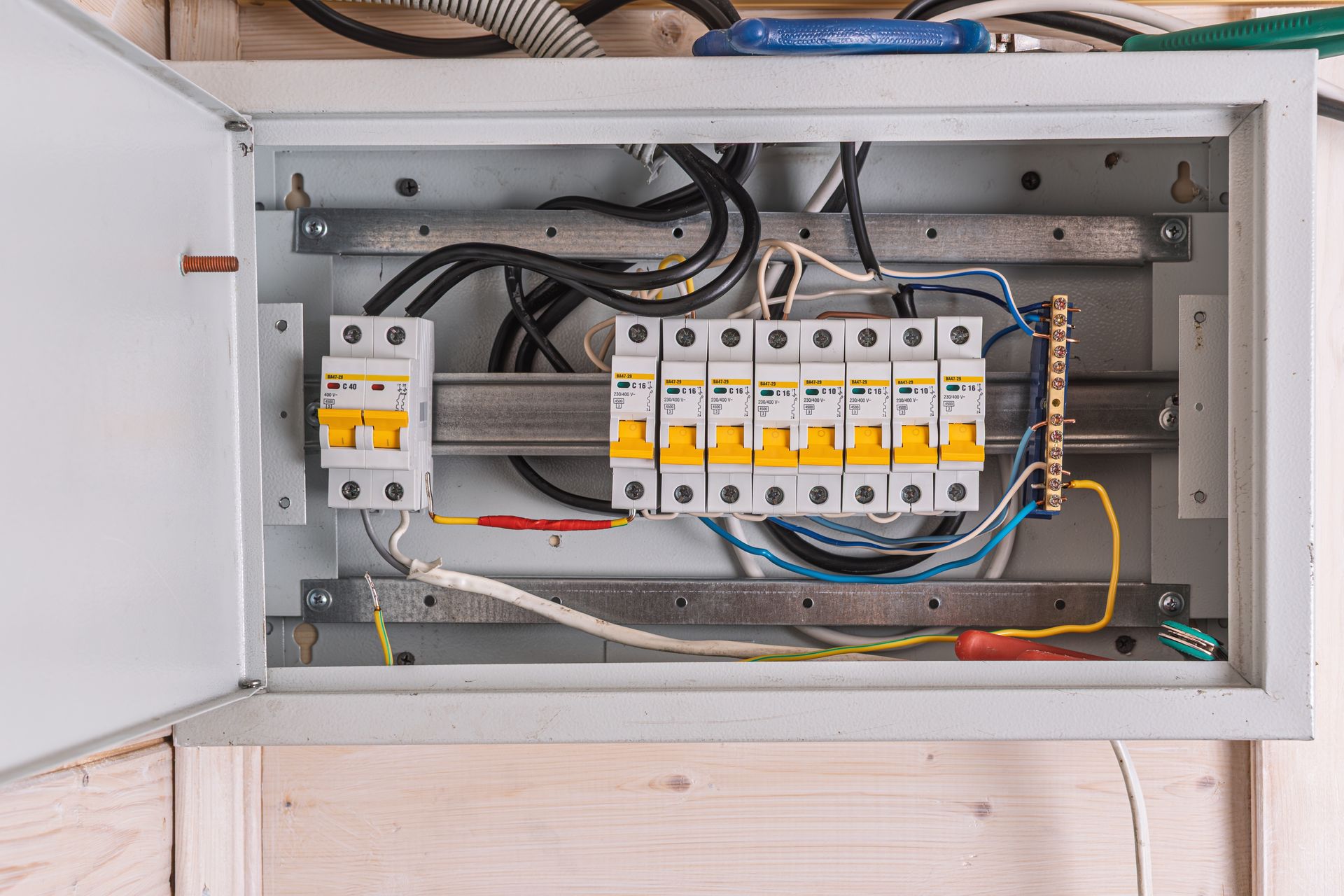
What Proper Panel Replacement Requires
Panel upgrades begin with load calculations that determine total amperage requirements based on square footage, heating and cooling systems, major appliances, and planned additions like generators or vehicle charging stations. The work includes obtaining electrical permits, coordinating utility disconnection and reconnection, installing the new service panel with appropriate circuit breakers, and arranging inspections to verify code compliance. Homes in rural areas of the Delmarva Peninsula often require weatherhead replacement and service mast reinforcement when upgrading from older 100-amp installations.
After the upgrade completes, circuit breakers no longer trip during normal household activity, and you can run multiple high-draw appliances simultaneously without voltage drops that cause lights to dim. The new panel provides labeled circuits with adequate spacing for future expansion, AFCI and GFCI protection where current code requires it, and a main breaker sized to handle increased electrical demand. Modern panels eliminate fire hazards associated with outdated fuse boxes and allow insurance carriers to issue or renew homeowner policies without electrical system exclusions.
The upgrade supports remodeling projects that add kitchens, bathrooms, or home offices, and accommodates dedicated circuits for equipment that older panels cannot safely supply. Properties with heat pumps, central air conditioning, electric water heaters, and workshop tools benefit from the additional capacity that prevents nuisance tripping and allows electrical systems to function as designed.
Questions Before Starting Your Project
Homeowners considering panel upgrades often ask about capacity requirements, installation timelines, and when electrical service changes become necessary.
What indicates that a 100-amp panel no longer provides adequate capacity?
When circuit breakers trip frequently despite balanced loads, lights dim when the air conditioner or well pump starts, or you cannot add new circuits for remodeling projects without exceeding panel capacity, the existing service has reached its limit and requires upgrading to support modern electrical demand.
How does utility coordination affect the installation timeline?
The utility company must disconnect service at the meter before panel replacement begins and reconnect power after installation and inspection, which typically adds one to three business days to the project depending on utility scheduling and whether service mast or weatherhead replacement is required.
What distinguishes 100-amp service from 200-amp installations?
A 100-amp service provides sufficient capacity for homes under 2,000 square feet with gas heat and standard appliances, while 200-amp service supports larger homes, electric heating and cooling systems, home offices with server equipment, EV charging stations, standby generators, and future electrical additions without approaching capacity limits.
When should panel upgrades happen during remodeling projects?
Panel replacement should occur before adding circuits for kitchen expansions, bathroom additions, or detached structures, as the existing service must support the increased load and provide physical space in the panel for additional breakers required by the new construction.
What inspection requirements apply to service upgrades in Delaware?
All panel replacements require electrical permits and inspections by local code enforcement to verify proper grounding, bonding, circuit protection, and compliance with current National Electrical Code standards before the utility company will restore permanent service to the property.
Towles Electric, Inc provides load assessments and panel evaluations for properties throughout Central Delaware. Request a detailed estimate to determine upgrade requirements based on your home's current and planned electrical systems.